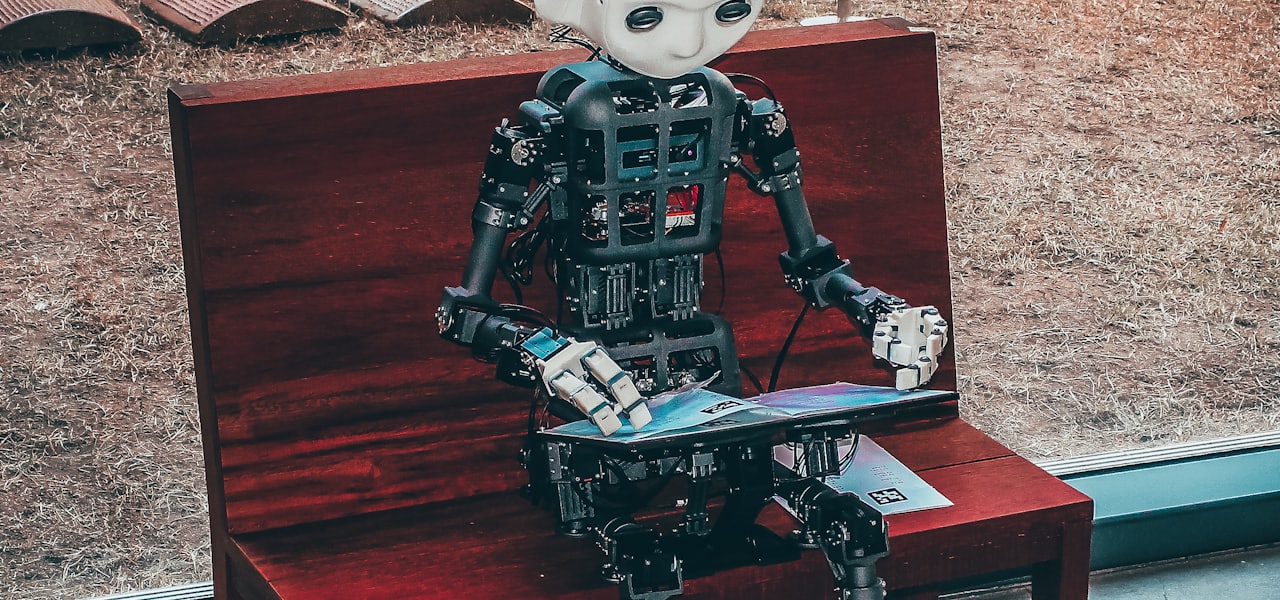
Neuroph is an object-oriented artificial neural network framework written in Java. It can be used to create and train neural networks in Java programs. Neuroph provides Java class library as well as GUI tool easyNeurons for creating and training neural networks. It is an open-source project hosted at SourceForge under the Apache License. Versions before 2.4 were licensed under LGPL 3, from this version the license is Apache 2.0 License. == Features == Neuroph's core classes correspond to basic neural network concepts like artificial neuron, neuron layer, neuron connections, weight, transfer function, input function, learning rule etc. Neuroph supports common neural network architectures such as Multilayer perceptron with Backpropagation, Kohonen and Hopfield networks. All these classes can be extended and customized to create custom neural networks and learning rules. Neuroph has built-in support for image recognition.
Machine learning in video games
Artificial intelligence and machine learning techniques are used in video games for a wide variety of applications such as non-player character (NPC) control, procedural content generation (PCG) and deep learning-based content generation. Machine learning is a subset of artificial intelligence that uses historical data to build predictive and analytical models. This is in sharp contrast to traditional methods of artificial intelligence such as search trees and expert systems. Information on machine learning techniques in the field of games is mostly known to public through research projects as most gaming companies choose not to publish specific information about their intellectual property. The most publicly known application of machine learning in games is likely the use of deep learning agents that compete with professional human players in complex strategy games. There has been a significant application of machine learning on games such as Atari/ALE, Doom, Minecraft, StarCraft, and car racing. Other games that did not originally exists as video games, such as chess and Go have also been affected by the machine learning. == Overview of relevant machine learning techniques == === Deep learning === Deep learning is a subset of machine learning which focuses heavily on the use of artificial neural networks (ANN) that learn to solve complex tasks. Deep learning uses multiple layers of ANN and other techniques to progressively extract information from an input. Due to this complex layered approach, deep learning models often require powerful machines to train and run on. ==== Convolutional neural networks ==== Convolutional neural networks (CNN) are specialized ANNs that are often used to analyze image data. These types of networks are able to learn translation invariant patterns, which are patterns that are not dependent on location. CNNs are able to learn these patterns in a hierarchy, meaning that earlier convolutional layers will learn smaller local patterns while later layers will learn larger patterns based on the previous patterns. A CNN's ability to learn visual data has made it a commonly used tool for deep learning in games. === Recurrent neural network === Recurrent neural networks are a type of ANN that are designed to process sequences of data in order, one part at a time rather than all at once. An RNN runs over each part of a sequence, using the current part of the sequence along with memory of previous parts of the current sequence to produce an output. These types of ANN are highly effective at tasks such as speech recognition and other problems that depend heavily on temporal order. There are several types of RNNs with different internal configurations; the basic implementation suffers from a lack of long term memory due to the vanishing gradient problem, thus it is rarely used over newer implementations. ==== Long short-term memory ==== A long short-term memory (LSTM) network is a specific implementation of a RNN that is designed to deal with the vanishing gradient problem seen in simple RNNs, which would lead to them gradually "forgetting" about previous parts of an inputted sequence when calculating the output of a current part. LSTMs solve this problem with the addition of an elaborate system that uses an additional input/output to keep track of long term data. LSTMs have achieved very strong results across various fields, and were used by several monumental deep learning agents in games. === Reinforcement learning === Reinforcement learning is the process of training an agent using rewards and/or punishments. The way an agent is rewarded or punished depends heavily on the problem; such as giving an agent a positive reward for winning a game or a negative one for losing. Reinforcement learning is used heavily in the field of machine learning and can be seen in methods such as Q-learning, policy search, Deep Q-networks and others. It has seen strong performance in both the field of games and robotics. === Neuroevolution === Neuroevolution involves the use of both neural networks and evolutionary algorithms. Instead of using gradient descent like most neural networks, neuroevolution models make use of evolutionary algorithms to update neurons in the network. Researchers claim that this process is less likely to get stuck in a local minimum and is potentially faster than state of the art deep learning techniques. == Deep learning agents == Machine learning agents have been used to take the place of a human player rather than function as NPCs, which are deliberately added into video games as part of designed gameplay. Deep learning agents have achieved impressive results when used in competition with both humans and other artificial intelligence agents. === Chess === Chess is a turn-based strategy game that is considered a difficult AI problem due to the computational complexity of its board space. Similar strategy games are often solved with some form of a Minimax Tree Search. These types of AI agents have been known to beat professional human players, such as the historic 1997 Deep Blue versus Garry Kasparov match. Since then, machine learning agents have shown ever greater success than previous AI agents. === Go === Go is another turn-based strategy game which is considered an even more difficult AI problem than chess. The state space of is Go is around 10^170 possible board states compared to the 10^120 board states for Chess. Prior to recent deep learning models, AI Go agents were only able to play at the level of a human amateur. ==== AlphaGo ==== Google's 2015 AlphaGo was the first AI agent to beat a professional Go player. AlphaGo used a deep learning model to train the weights of a Monte Carlo tree search (MCTS). The deep learning model consisted of 2 ANN, a policy network to predict the probabilities of potential moves by opponents, and a value network to predict the win chance of a given state. The deep learning model allows the agent to explore potential game states more efficiently than a vanilla MCTS. The network were initially trained on games of humans players and then were further trained by games against itself. ==== AlphaGo Zero ==== AlphaGo Zero, another implementation of AlphaGo, was able to train entirely by playing against itself. It was able to quickly train up to the capabilities of the previous agent. === StarCraft series === StarCraft and its sequel StarCraft II are real-time strategy (RTS) video games that have become popular environments for AI research. Blizzard and DeepMind have worked together to release a public StarCraft 2 environment for AI research to be done on. Various deep learning methods have been tested on both games, though most agents usually have trouble outperforming the default AI with cheats enabled or skilled players of the game. ==== Alphastar ==== Alphastar was the first AI agent to beat professional StarCraft 2 players without any in-game advantages. The deep learning network of the agent initially received input from a simplified zoomed out version of the gamestate, but was later updated to play using a camera like other human players. The developers have not publicly released the code or architecture of their model, but have listed several state of the art machine learning techniques such as relational deep reinforcement learning, long short-term memory, auto-regressive policy heads, pointer networks, and centralized value baseline. Alphastar was initially trained with supervised learning, it watched replays of many human games in order to learn basic strategies. It then trained against different versions of itself and was improved through reinforcement learning. The final version was hugely successful, but only trained to play on a specific map in a protoss mirror matchup. === Dota 2 === Dota 2 is a multiplayer online battle arena (MOBA) game. Like other complex games, traditional AI agents have not been able to compete on the same level as professional human player. The only widely published information on AI agents attempted on Dota 2 is OpenAI's deep learning Five agent. ==== OpenAI Five ==== OpenAI Five utilized separate long short-term memory networks to learn each hero. It trained using a reinforcement learning technique known as Proximal Policy Learning running on a system containing 256 GPUs and 128,000 CPU cores. Five trained for months, accumulating 180 years of game experience each day, before facing off with professional players. It was eventually able to beat the 2018 Dota 2 esports champion team in a 2019 series of games. === Planetary Annihilation === Planetary Annihilation is a real-time strategy game which focuses on massive scale war. The developers use ANNs in their default AI agent. === Supreme Commander 2 === Supreme Commander 2 is a real-time strategy (RTS) video game. The game uses Multilayer Perceptrons (MLPs) to control a platoon’s reaction to encountered enemy units. Total of four MLPs are used, one for each platoon type: land, naval
Is an AI Copywriting Tool Worth It in 2026?
Looking for the best AI copywriting tool? An AI copywriting tool is software that uses machine learning to help you get more done — it can save you hours every week by automating repetitive work. Most options offer a generous free tier, with paid plans unlocking higher limits, faster processing, and team features. Whether you are a beginner or a pro, the right AI copywriting tool slots into your workflow and pays for itself fast. Read on for hands-on impressions, pricing tiers, and the standout features that matter.
Heng Ji
Heng Ji is a computer scientist who works on information extraction and natural language processing. She is well known for her work on joined named entity recognition and relation extraction, as well as for her work on cross-document event extraction. She has been coordinating the popular NIST TAC Knowledge Base Population task since 2010. She has been recognised as one of AI's 10 to watch by IEEE Intelligent Systems in 2013, and has won multiple awards, including a NSF Career Award in 2009, Google Research awards in 2009 and 2014, and an IBM Watson Faculty Award in 2012. == Education == Heng Ji obtained a Bachelor's and master's degree in Computational Linguistics from Tsinghua University. She subsequently obtained a MSc, then PhD in Computer Science from New York University in 2008 under the supervision of Ralph Grishman. Her PhD thesis was on the topic of information extraction, with a particular focus on joint training of multiple components in the information extraction pipeline, as well as cross-lingual learning. == Career == Upon graduating with a PhD from New York University, Ji took up a position as assistant professor at Queens College, City University of New York, where she founded the BLENDER Lab, which focuses on research on cross-lingual, cross-documents, cross-media information extraction and fusion. In 2013, she joined Rensselaer Polytechnic Institute as an Edward P. Hamilton Development Chair and Tenured associate professor in Computer Science. Since 2019, she has been a full professor at the University of Illinois at Urbana–Champaign, as well as an Amazon Scholar. == Research == Heng Ji works in the area of natural language processing, machine learning and information extraction. She has published over 300 peer-reviewed research papers. Her work is published in the proceedings of computer science conferences, including the Annual Meeting of the Association for Computational Linguistics, The Web Conference, and the ACM Conference on Knowledge Discovery and Data Mining (KDD). Ji is a leading researcher in information extraction, having coordinated the popular NIST TAC Knowledge Base Population shared task since 2010. She is most recognised for her work on modelling interactions between subtasks in information extraction, which was also the topic of her PhD thesis, and for her work on event detection using cross-document signals. == Selected honors and distinctions == 2009 NSF Career Award 2009 Google Research Award 2012 IBM Watson Faculty Award 2013 IEEE AI's 10 to Watch 2014 Google Research Award 2016 World Economic Forum, 'Young Scientist' 2017 World Economic Forum, 'Young Scientist' 2020 Annual Meeting of the Association for Computational Linguistics, best demonstration paper
AI Humanizers Reviews: What Actually Works in 2026
Curious about the best AI humanizer? An AI humanizer is software that uses machine learning to help you get more done — it combines speed, accuracy, and an interface that just works. Hands-on testing shows real-world results vary, so a short free trial is the smartest way to decide. Whether you are a beginner or a pro, the right AI humanizer slots into your workflow and pays for itself fast. Read on for hands-on impressions, pricing tiers, and the standout features that matter.
17LIVE
17LIVE is an international entertainment platform. As of 2024, 17LIVE is the #3 live broadcasting platform globally, formed by its flagship live stream app 17LIVE (LIVIT in English markets), MEME Live and live stream e-commerce platforms HandsUP and OrderPally. == History == 17LIVE was first founded in Taiwan in 2015 by Jeffery Huang. The company has maintained its leading position since its entry into the Japan market in 2017, becoming the biggest platform for live entertainment in Japan, Taiwan, Hong Kong, and other countries. In 2017, 17 closed out US$33M in series B round to merge with dating software Paktor, with Joseph Phua (Co-founder of Paktor) taking over the leadership of 17LIVE as CEO and Co-founder, as well as to enter the Japan and Hong Kong market. Within one year, 17 Media became the #1 market leader in Japan. In 2018, the company raised $25M in series C round as it got ready for US IPO, which failed to materialize. 17LIVE had an unsuccessful US IPO attempt in 2018. Since then, the company reformed and transformed the business. Some key initiatives include the hiring of current CEO Hirofumi Ono, spin-off of Paktor (dating software business unit), full buy-out of founder Jeffery Huang, acquisition of MEME and HandsUp, and more. Despite the failed IPO attempt, the company continued to push for international expansion, including creating ‘LIVIT’ for the English-speaking markets to enter US, India, and North Africa. In 2019, 17's flagship live streaming app reached 10M downloads in Japan, and the business continues to push for both organic and inorganic expansion. Some key M&A highlights in the year include the acquisition of MEME Live in Southeast Asia, as well as HandsUp, a live e-commerce platform. In 2020, M17 closed out $26.5M in Series D round to continue organic growth in Japan, US and Middle East. In the same year, the company also sold its dating app business, Parktor, to rationalise M17 into a live-stream pure play business, followed by the appointment of its current Chairman, Joseph Phua, and previous Global CEO, Hirofumi Ono. With the buy-out and departure of founder Jeff Huang, the parent holding company M17 Entertainment Limited was officially renamed as 17 LIVE Group. An estimated 60 million users registered in 154 countries and territories in April 2022. In 2022, September, 17LIVE announced Group CEO Hirofumi Ono steps down. Alex Lien takes over the leadership as new Group COO; Jing Shen Ng appointed Group CTO. In 2023, March, 17LIVE announced Alex Lien promoted to Global CEO. Kenta Masuda appointed as Global CFO. === Collaboration with Ayumi Hamasaki === To celebrate its 4th anniversary, 17LIVE collaborated with Japanese singer-songwriter Ayumi Hamasaki, who led the 17LIVE 4th Anniversary meets Ayumi Hamasaki series starting October 18, 2021. Along with composer and arranger Yuta Nakano, Hamasaki judged auditioning artists competing for the chance to work with her and her production team for a debut single. The series was streamed live on the 17LIVE website, the final airing on November 11. The eventual winner was named as Yoshitaka_song. When asked why she collaborated with 17LIVE as a producer, Hamasaki commented: "Although the world has become like this (during COVID-19), I believe that the art of entertainment can give people dreams, hope, courage, and strength. I hope that kind of light will continue to shine through the entertainment industry." == Features == On 17LIVE, artists (LIVERs) are able to broadcast live, and post photos and videos from their album. The app has been designed for LIVERs to simply open the App, and start sharing contents without the need to edit or professionally curate their videos. The platform cultivates LIVERs, supports them with a local content management team, and provides artists with various functions, such as real time chatting, gifting, fan clubs, interactive competition and events. Today, 17LIVE has 46 thousands contracted artists and more than 2.3 million MAU, who spend 44 minutes on the platform every day. 17LIVE continues to advocate content-driven philosophy and delivers diverse topics, from politics and music to entertainment, to broaden its audience groups. 17LIVE also hosts offline flash events and concerts to attract new users and support LIVERs better connect with their fans. == Operation == 17LIVE has over 700 employees globally. The app provides few monetization models for LIVERs on the platform, including: Gifting: user / fans buy virtual gifts on the app to send to their favored LIVERs. Subscription: monthly subscription fan club service for access to exclusive content Pay-per-view: ticket service for online streaming concerts E-commerce: live e-commerce platform In the past, 17LIVE has encountered some regulatory headwinds with reported incidents of inappropriate livestream content on the platform. The incidents were direct results of the lack of oversight and supervision capability in place in the business at the time. Over the years, 17LIVE claims to have put in tremendous manpower and effort into improving, monitoring and maintaining control over both the live stream content and the KYC procedures and systems.
Sinkov statistic
Sinkov statistics, also known as log-weight statistics, is a specialized field of statistics that was developed by Abraham Sinkov, while working for the small Signal Intelligence Service organization, the primary mission of which was to compile codes and ciphers for use by the U.S. Army. The mathematics involved include modular arithmetic, a bit of number theory, some linear algebra of two dimensions with matrices, some combinatorics, and a little statistics. Sinkov did not explain the theoretical underpinnings of his statistics, or characterized its distribution, nor did he give a decision procedure for accepting or rejecting candidate plaintexts on the basis of their S1 scores. The situation becomes more difficult when comparing strings of different lengths because Sinkov does not explain how the distribution of his statistics changes with length, especially when applied to higher-order grams. As for how to accept or reject a candidate plaintext, Sinkov simply said to try all possibilities and to pick the one with the highest S1 value. Although the procedure works for some applications, it is inadequate for applications that require on-line decisions. Furthermore, it is desirable to have a meaningful interpretation of the S1 values.